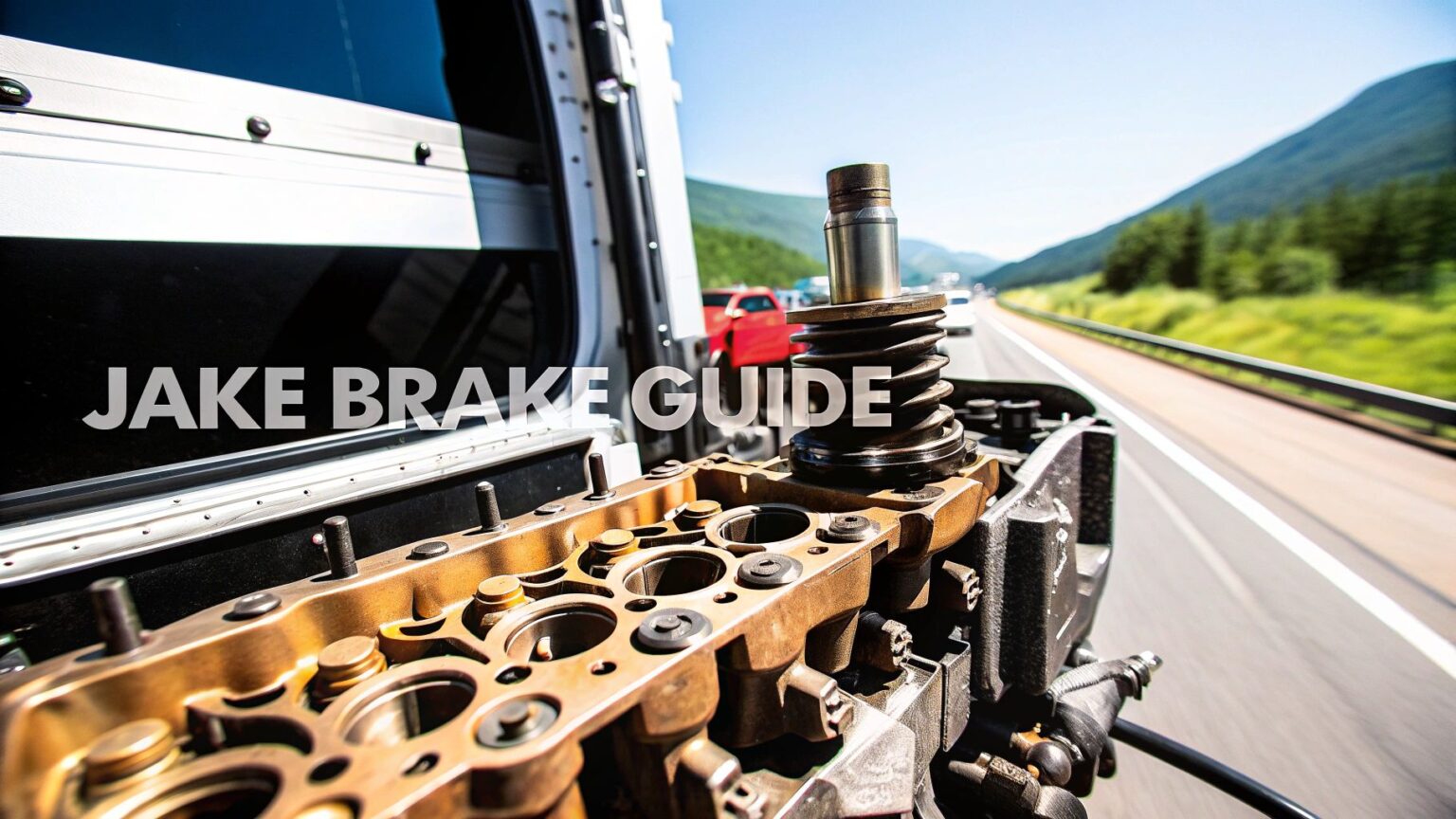
A Jake Brake, technically known as a compression release engine brake, is an essential safety system used by professional truck drivers. In simple terms, it allows the truck’s powerful diesel engine to help slow the vehicle instead of accelerating it.
The system works by converting the engine into a type of air compressor that absorbs energy from the moving vehicle. This allows drivers to control their speed—especially on long downhill grades—without relying heavily on the service brakes. Using engine braking helps prevent brake overheating, which can lead to brake fade or even total brake failure in extreme situations.
Understanding What a Jake Brake Does
Imagine riding a bicycle down a steep hill. If you stop pedaling, gravity quickly increases your speed. Now imagine the pedals pushing back against your feet as you try to move them—that resistance would naturally slow you down. A Jake Brake works in a similar way inside a diesel engine.
Instead of allowing the engine to produce power that drives the truck forward, the system changes how the engine cycle operates so that it absorbs energy. By doing this, the engine creates a strong resistance force that slows the truck without constant use of the service brakes.
Why the Jake Brake Is Important for Truck Safety
The primary purpose of a Jake Brake is to help drivers manage the large amount of momentum a heavy truck generates, particularly when traveling downhill while carrying a load. It plays a major role in modern trucking safety.
The system provides several important benefits:
Protecting Service Brakes: By handling most of the braking effort on long descents, the Jake Brake prevents excessive heat buildup in the main braking system.
Improving Speed Control: Drivers gain better control of vehicle speed, especially on steep grades where maintaining safe speed is critical.
Reducing Brake Wear: Less use of the service brakes means brake pads, drums, and rotors last significantly longer.
When used properly, the Jake Brake takes on a large portion of the braking workload. This not only extends the life of brake components but also improves overall driving safety.
More Than Just a Dashboard Switch
Knowing how a Jake Brake works is an important part of becoming a skilled professional driver. It is more than simply activating a switch—it requires understanding when and how to use it correctly.
For new drivers, learning to use engine braking effectively is just as important as performing proper vehicle inspections or maintaining awareness of traffic conditions. Proper use of the Jake Brake helps ensure safe operation of the vehicle and protects both the driver and others on the road.
The History Behind the Jake Brake
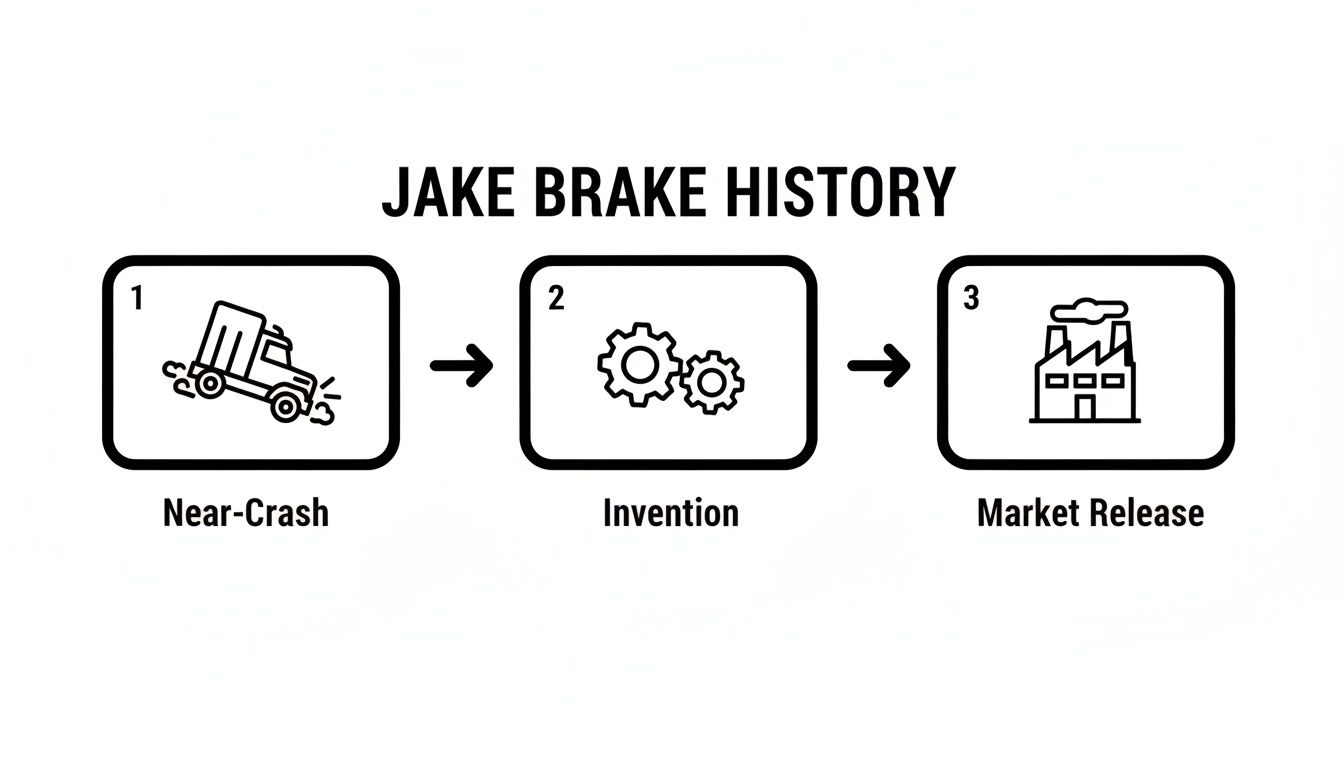
Like many important safety innovations, the Jake Brake was created in response to a dangerous real-world situation. The idea originated from Clessie Lyle Cummins, founder of the Cummins Engine Company, whose name is closely associated with diesel engine development in the United States.
The concept was inspired by a frightening experience that occurred during a long-distance promotional drive in 1931.
A Dangerous Descent on Cajon Pass
In August of that year, Cummins was driving a diesel-powered truck across the country to demonstrate the performance of his engine. During the trip, he approached the steep and winding Cajon Pass in California. As the truck began descending the mountain grade, the service brakes overheated and completely failed.
The truck rapidly began gaining speed down the steep gravel road. Acting quickly, Cummins instructed his passenger to shift into a lower gear while he shut off the fuel supply and injected water into the cylinders using a hand pump. This improvised technique increased engine compression and slowed the truck enough to regain control.
That experience revealed something important: the engine’s compression could be used to slow the vehicle rather than just power it.
From Idea to Invention
Although the incident happened in 1931, the idea took years to fully develop. After stepping away from his leadership role at Cummins Inc., Clessie Cummins focused on turning the concept into a practical device. By the mid-1950s he began designing a system that could reliably convert engine power into braking force.
In 1957 he successfully created the compression release engine brake. The Jacobs Manufacturing Company, which was well known for producing drill chucks, acquired the patent and continued refining the design. The first commercial version of the system entered the market in 1961 and quickly became known in the trucking industry as the “Jake Brake.”
The invention dramatically improved safety for heavy trucks operating in mountainous regions and soon became widely adopted across the industry.
How a Jake Brake Works
To understand how a Jake Brake functions, it helps to look at how a diesel engine normally operates. A typical diesel engine runs through four main stages: intake, compression, power, and exhaust. During the power stroke, fuel ignites and pushes the piston downward, generating energy that turns the crankshaft and moves the truck forward.
A Jake Brake alters this cycle so that the engine absorbs energy instead of producing it.
When the driver activates the Jake Brake, the system changes the timing of the engine’s valve operation. This modification allows the engine to release compressed air at a specific moment during the compression cycle, preventing that stored energy from pushing the piston back down.
Changing the Engine Cycle
Normally, when air inside the cylinder is compressed, it acts like a powerful spring. When the piston reaches the top of the cylinder, that compressed air pushes the piston downward again, returning energy to the engine.
The Jake Brake interrupts this process. Just as the piston reaches the top of the compression stroke, the system briefly opens the exhaust valve. The compressed air is immediately released through the exhaust system instead of pushing the piston back down.
Because the compressed air is released, the engine loses the stored energy that would normally help rotate the crankshaft. The truck’s momentum must now work harder to keep the engine turning, creating resistance that slows the vehicle.
Each cylinder repeats this process continuously, generating a steady braking force without relying on the service brakes.
Step-by-Step Operation
The process inside the engine happens extremely quickly and repeats many times per second.
Driver Activation: The driver turns on the Jake Brake using the dashboard switch, often selecting different braking levels.
Compression Phase: The piston moves upward, compressing the air in the cylinder and storing energy.
Valve Opening: At the top of the compression stroke, the system briefly opens the exhaust valve.
Energy Release: The compressed air escapes through the exhaust system.
Braking Effect: Without the stored energy pushing the piston downward, the engine resists rotation and slows the truck.
This repeating cycle creates a strong and reliable engine braking effect that helps drivers control heavy vehicles safely during long descents.
It’s a perfect example of how a real-world problem sparked an engineering solution that keeps drivers safe to this day.
The Real-World Pros and Cons of Using a Jake Brake
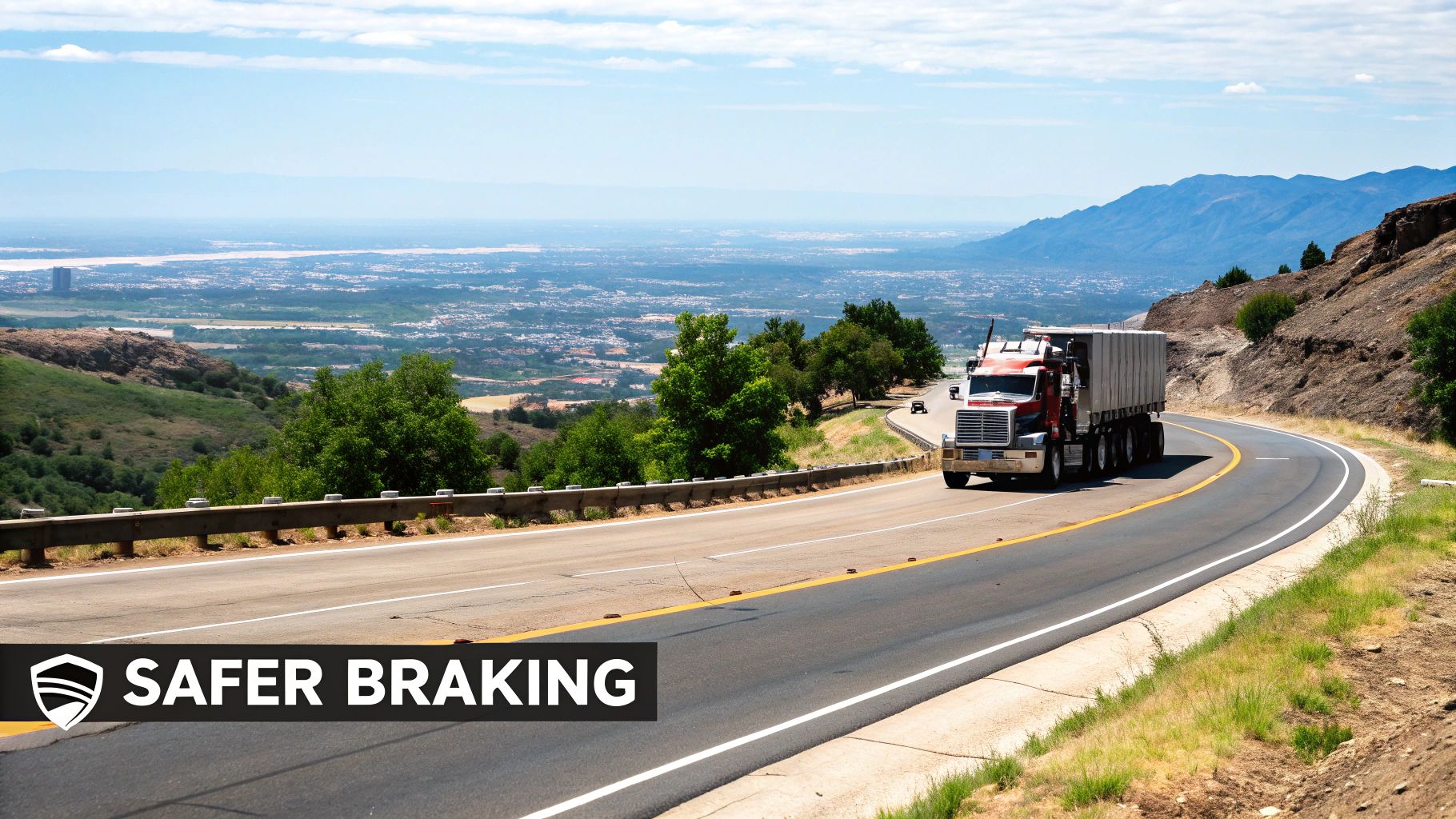
A Jake brake is a fantastic tool in any professional driver’s kit, but becoming a true pro means understanding its strengths just as well as its weaknesses. The upside is huge, hitting both your safety and your wallet in a good way.
When you know how to use it right, the benefits are immediate and powerful. The biggest one? A massive reduction in wear and tear on your primary service brakes.
The Clear Advantages of Engine Braking
By letting the engine do the heavy lifting to slow you down on a long grade, your friction brakes stay cool and ready for when you really need them in an emergency. This gives you a level of control over a massive rig on a steep descent that is truly priceless. That kind of peace of mind is hard to put a number on.
This saved wear and tear also translates directly into some serious cost savings. Talk to any old-timer in the industry, and they’ll tell you stories about how much longer their brakes last. Some experienced drivers report that it can take on 90% of the braking work on long descents, effectively doubling the life of their foundation brakes.
To really see how this fits into the bigger picture of operational costs, it helps to have a solid preventive maintenance checklist for trucks.
The core benefits of using a Jake Brake are simple but profound: enhanced safety through better vehicle control, significantly longer service brake life, and lower overall maintenance expenses.
Understanding the Downsides and Risks
Of course, no tool is perfect, and the Jake brake has one very famous drawback: the noise. That distinct, loud BRAP-BRAP-BRAP is exactly why you see “No Engine Brake” signs posted near towns and residential areas. Being a courteous professional means respecting those local rules.
But beyond the noise, there are situations where using a Jake is downright dangerous. The intense braking force it creates is only applied to the drive wheels. This is a critical detail.
On slick roads—think ice, snow, or even just a heavy downpour—hitting that Jake brake can cause your drive wheels to lock up in an instant. That sudden loss of traction is a fast track to a skid or a terrifying jackknife. When the grip is gone, you have to rely on the steady, careful application of your service brakes to stay in control.
Knowing when not to use the Jake brake is every bit as important as knowing when to use it.
Understanding Jake Brake Laws and Noise Restrictions
Being a professional driver is about more than just getting from Point A to Point B. It’s about being a responsible member of every community you travel through. If you’ve ever rolled past a sign that says “Engine Brake Prohibited” or “No Jake Brakes,” you’ve seen a perfect example of this in action.
Those signs are a direct response to the Jake brake’s most famous—or infamous—characteristic: its sound. The loud, rumbling noise is an unavoidable part of how the system works, and it’s led to a patchwork of local noise ordinances all over the country. This is especially true in quiet residential areas. Think of these rules less as a hassle and more as a request for professional courtesy.
Why the Noise Leads to Rules
There’s a reason people compare the sound of a Jake brake to a jackhammer. When the system rapidly releases that highly compressed air from the cylinders, the noise can hit 110-120 decibels. For perspective, that’s louder than a chainsaw. It’s this sharp, sudden blast of sound that prompts towns to put up those signs.
This isn’t a new issue, either. The push for these regulations has been going on for decades. By the early 2000s, over 50 U.S. cities had already banned their use, with fines reaching as high as $500 for using an unmuffled engine brake near residential areas.
Adhering to these local ordinances is a mark of a skilled and respectful driver. It shows you understand your vehicle’s impact on the environment around you and prioritize community safety and comfort alongside your operational duties.
Professionalism on the Road
At the end of the day, following these laws is all about being a good neighbor on the highway. A true professional knows when to engage the Jake brake for safety on a steep mountain pass and when to flip it off to avoid rattling the windows of a quiet little town. Following the rules helps maintain a positive image for the entire trucking industry.
Ignoring these signs can lead to some hefty fines and put a dent in your professional reputation. For drivers working in states with a huge variety of local communities, like those getting their CDL in California, this awareness is absolutely critical. To learn more about state-specific guidelines, you can check out our California CDL guide.
Mastering the Jake Brake During CDL Training
Book smarts are one thing, but truly mastering the Jake brake happens out on the road. This is where the theory you learned in the classroom gets real, and during your CDL training, your instructor will be right there to guide you from just understanding the concept to actually feeling its power through the driver’s seat.
The first big lesson is learning when to flip that switch. As you approach a long, steep downgrade, you want to engage the Jake brake early. This lets you set a safe, controlled speed right from the get-go, instead of waiting until the truck is already building dangerous momentum and then trying to rein it in.
Progressive Braking and Control
Most modern rigs don’t just have a simple on/off switch for the engine brake. You’ll typically find a low, medium, and high setting, and learning how to use these stages is a game-changer for smooth, professional driving.
- Low Setting: Think of this as your gentle helper. It’s perfect for slight slopes or when you just need to shave off a few miles per hour without ever touching the service brakes.
- Medium Setting: This is your everyday workhorse. For most standard downgrades, the medium setting gives you a solid, reliable braking force that keeps your speed right where you want it.
- High Setting: Save this one for the big stuff. The steepest, most challenging hills demand maximum retarding power, and that’s when you’ll be glad you have the high setting to keep everything under control.
Learning to feather these settings gives you incredible command over your truck. A huge part of your on-road training will focus on blending the Jake brake with your service brakes. The proper technique is to let the engine brake do the heavy lifting—slowing the truck from highway speeds—and then use your service brakes for the last little bit to come to a full, smooth stop.
The single most important rule your instructor will drill into you is this: never, ever use the Jake brake on wet, icy, or snowy roads. That powerful braking force is applied only to the drive wheels, which can make them lock up instantly on a slick surface and send your rig into a terrifying jackknife skid.
This kind of hands-on, practical experience is what turns a nervous student into a confident professional driver. Understanding these critical details is just as important as acing the written parts of your CDL exam, like the general knowledge test. Your training will hammer home one simple truth: your best tools are always safety and good judgment.
Got Questions About the Jake Brake? We’ve Got Answers.
Let’s wrap this up by tackling some of the most common questions new drivers have about the Jake brake. Getting these practical details straight will help you feel much more confident using this essential piece of equipment out on the road.
Will Using the Jake Brake Mess Up My Engine?
Straight up, no. When you use it correctly, a Jake brake is perfectly safe for your engine. The whole system was designed from the ground up to work in harmony with your engine’s components. It’s just changing when the valves open; it’s not adding any crazy, new stress.
Just keep up with your regular maintenance, and both your engine and the Jake brake will keep running strong.
If you have any doubts, consider this: Jacobs Vehicle Systems, the original manufacturer, has produced over 9 million of these units since 1961. That’s a whole lot of trust from fleets and drivers all over the world.
Jake Brake vs. Exhaust Brake: What’s the Real Difference?
It’s easy to get these two mixed up since they both help slow you down, but they work in completely different ways. The Jake brake is a true compression release brake, and it’s the far more powerful of the two. It cleverly opens the exhaust valves right at the top of the compression stroke, releasing all that built-up pressure and killing the power stroke.
An exhaust brake, on the other hand, is a much simpler setup. It’s basically a butterfly valve in your exhaust pipe. When you activate it, the valve closes and creates backpressure, which slows down the engine. Because of its raw stopping power, the Jake brake is the go-to for pretty much every Class 8 truck on the highway.
Think of it like this: A Jake brake is like an “off switch” for your engine’s power cycle. An exhaust brake is more like stuffing a potato in the tailpipe—it creates a blockage to slow things down.
Can I Use the Jake Brake in Rain or Snow?
This is a big one: Never use your Jake brake on slick surfaces like wet, icy, or snow-covered roads.
The reason is simple. The Jake brake only applies its powerful braking force to your drive wheels. On a low-traction surface, that sudden force can easily cause those wheels to lock up, sending you into a dangerous skid or a full-on jackknife. When the weather gets nasty, stick to a gentle, steady application of your service brakes to stay in control.
At Patriot CDL, we believe in hands-on training that prepares you for the real world. Our instructors teach you how to master every part of your rig, from engine brakes to tricky backing maneuvers. If you’re ready to start a rewarding career on the open road with a school that’s truly invested in your success, we’re here to help. Learn more about our CDL programs.